


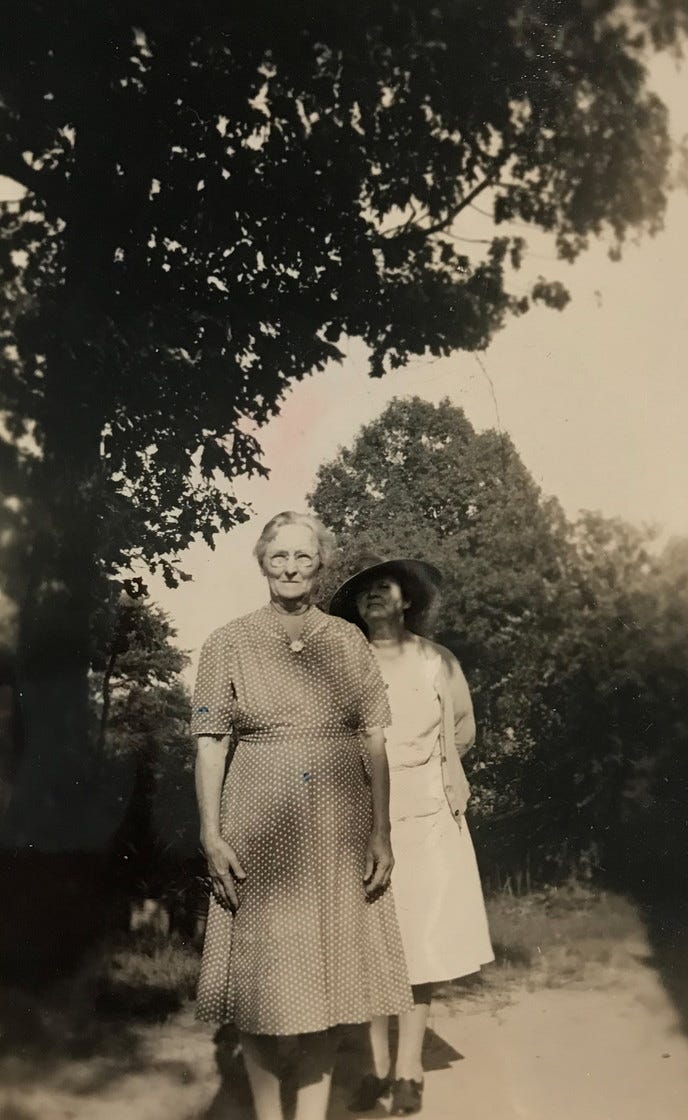
There’s a photograph from 1946 I return to often. Two women stand together under the shade of summer trees in South Carolina. The woman in front, wearing a polka-dot dress, is Mary Florence Lynch Edens—”Grannie Edens” to our family. Behind her stands her daughter, my beloved great-grand aunt, the woman we called Aunt Esther.
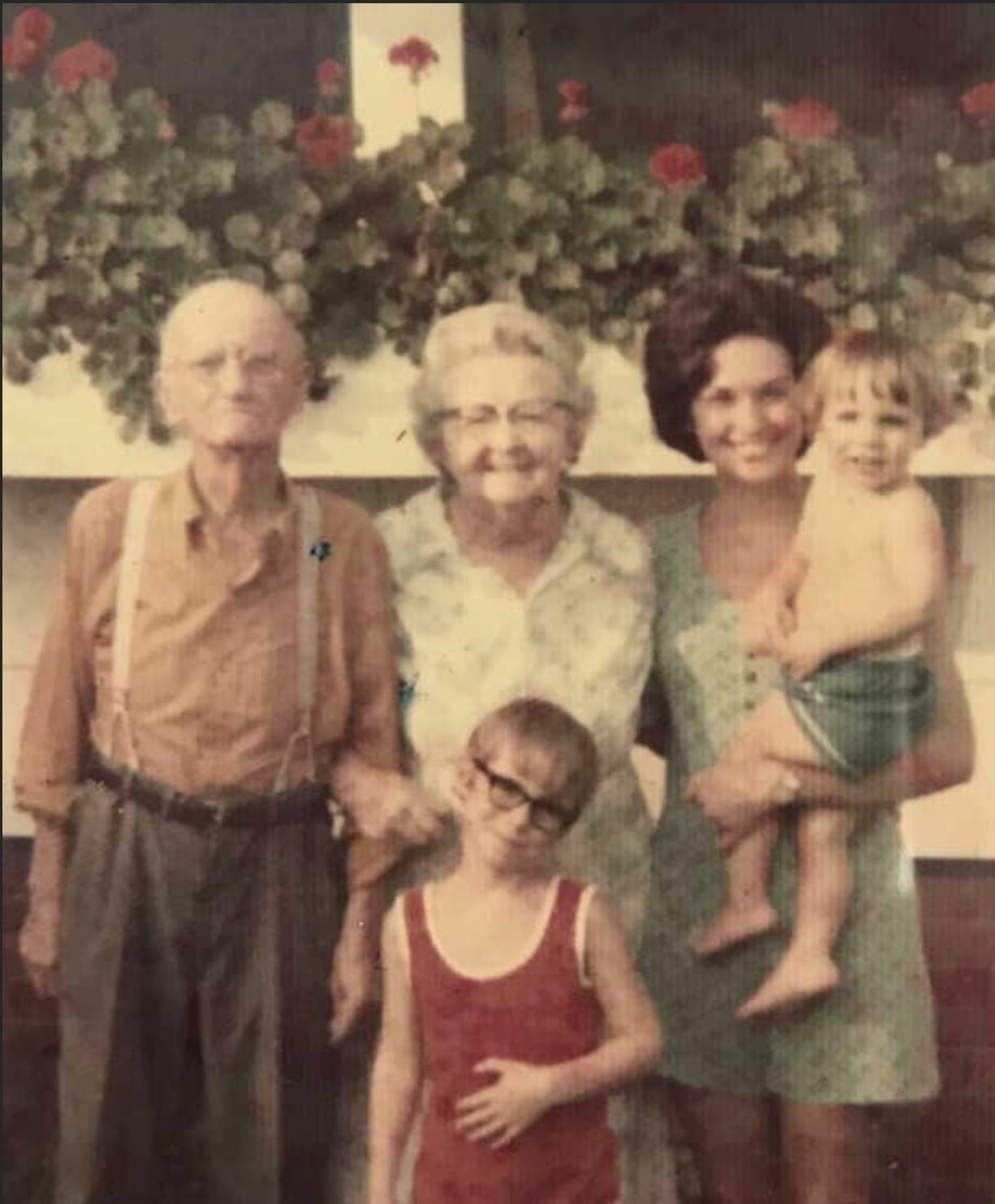
And then there’s another photograph, taken around 1975 or 1976, with geraniums blooming in a window box. Uncle Ted stands on the left in his work shirt and suspenders. Aunt Esther is in the center, white-haired and smiling behind her glasses. My mother is on the right, holding my baby brother, and I’m in front in a red tank top. Believe Uncle Larry is behind the camera taking the kodak snapshot.
Four generations. One afternoon. The kind of photograph you don’t know to treasure until years later.
A Born Teacher
Aunt Esther began teaching at eighteen years old, straight out of high school in 1913. Think about that for a moment—barely more than a girl herself, standing in front of a classroom, charged with shaping young minds.
But perhaps it was inevitable. Her father, John Davis Edens, was a book-focused teacher himself, a man who kept Latin grammars and geometry texts that documented his own educational journey in the late 19th century. The love of learning ran in the blood.
Her first position was as an assistant to Virginia Ligon at a frame school building in the Pickens Mill community. When Ligon departed for community work, Aunt Esther stepped up. She served as principal of the Pickens Mill School for seven years—seven years of opening schoolhouse doors, lighting stoves in winter, and coaxing knowledge into the minds of children who might otherwise never have had the chance.
By 1929, she was principal of a two-teacher school at Midway, north of Pickens, where she taught all elementary grades. All of them. In one room. If you’ve never tried to simultaneously teach a six-year-old the alphabet while drilling long division into a twelve-year-old’s head, you cannot fully appreciate what that required.
More Than a Teacher
But Aunt Esther’s greatest teaching didn’t happen in a schoolhouse.
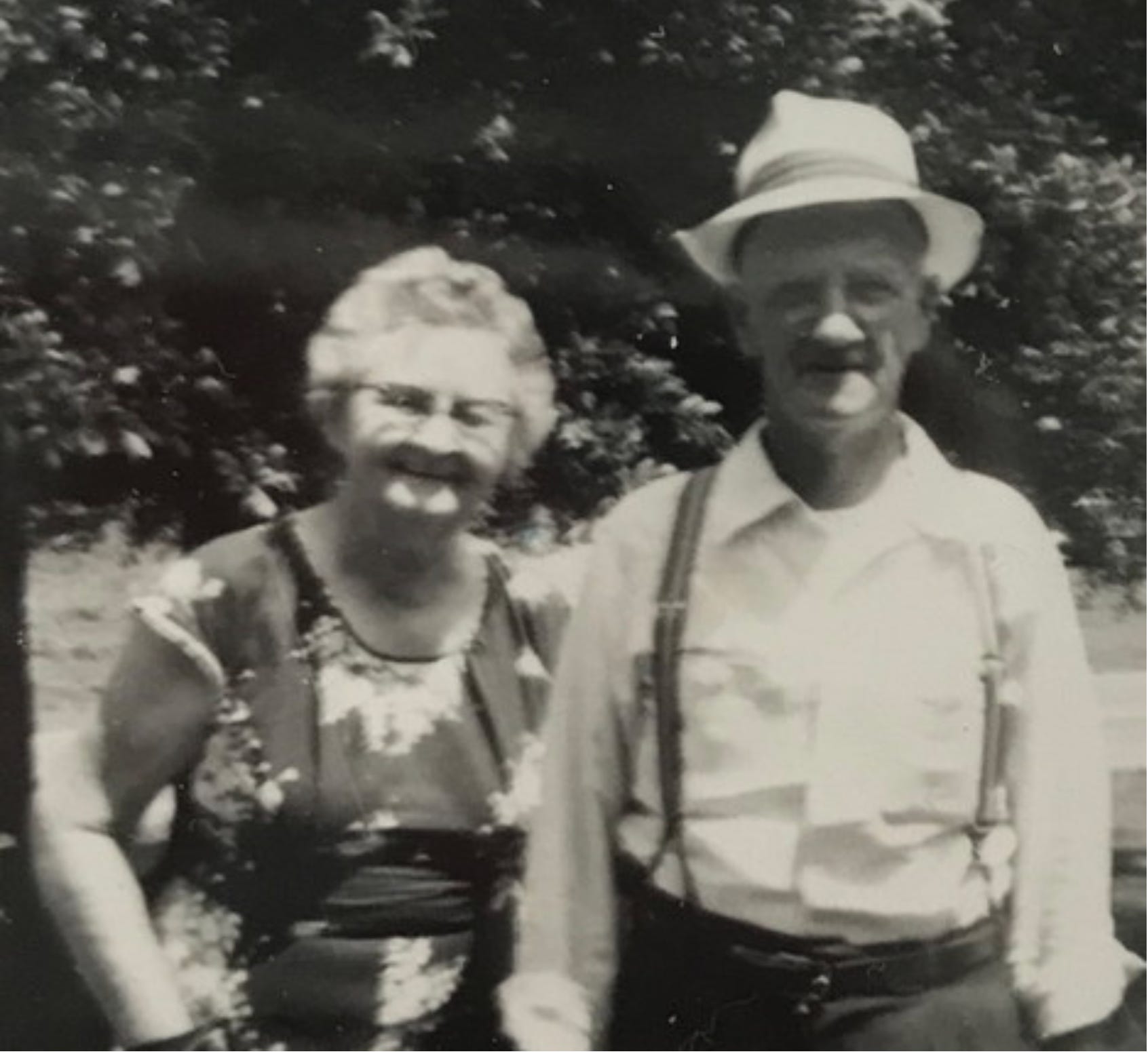
She never had children of her own. She lived at home with her mother as an unmarried teacher until past the age of thirty, when she married S.E. “Ted” Mauldin on December 29, 1929, and moved to Six Mile, South Carolina. Her stepchildren became her children. Her nieces and nephews—and their children—became her heart.
My mother had an extraordinary relationship with Aunt Esther. My mom was the daughter of Catherine, who was Aunt Esther’s niece—the child of Esther’s brother Jay and his wife Kate. The bond between my mother and her great-aunt was something special, the kind of love that spans generations and doesn’t need explanation.
And I was lucky enough to witness it, and to have my own small piece of it too.
Cornbread and Milk
Here’s what I remember: brushing Aunt Esther’s hair for a dime.
She would sit there, patient as anything, while I worked the brush through her white hair. A dime was good money to a kid. But the real payment was the time—being close to her, being trusted with something as simple and intimate as brushing her hair.
And I remember her nighttime meal: cornbread and milk.
She’d make cornbread for lunch, for herself and Uncle Ted, and save what was left over. Come evening, she’d crumble it into a glass of cold milk. That was dinner. Or, in my case, a delicious snack I’d share with her.
There’s nothing fancy about cornbread and milk. But there’s something sacred about it too—the way it speaks of a generation that wasted nothing, that found comfort in simple things, that knew how to make do and make it good.
Aunt Esther was amazing.
The Keeper of Stories
Aunt Esther understood something essential: that families exist not just in the present, but in the long chain of those who came before. She became the keeper of our history.
She preserved genealogical information about the early Edens and Lynch families. She shared letters detailing where family members were born. She kept her father’s academic books—those Latin grammars and geometry texts—understanding that they were more than old books. They were evidence. Proof of a man’s hunger to learn, passed down through generations.
When her brother Jay broke his arm in 1930, she was there with financial and emotional support for his family. When her mother, Grannie Edens, died in 1948, Aunt Esther served as executrix of the estate, handling the practical matters of grief with the same steady competence she brought to everything.
Grannie Edens
I should say something about the woman in front in that 1946 photograph—Mary Florence Lynch, born November 28, 1871, in Pickens County, South Carolina.
She was twenty-four when she had Aunt Esther. She lived through the tail end of Reconstruction, through two World Wars, through the Great Depression. She raised a daughter who would teach hundreds of children, who would preserve family history, who would love her grand-nieces and grand-nephews as if they were her own.
She died on March 16, 1948, in Pickens, having lived seventy-six years in the same county where she was born.
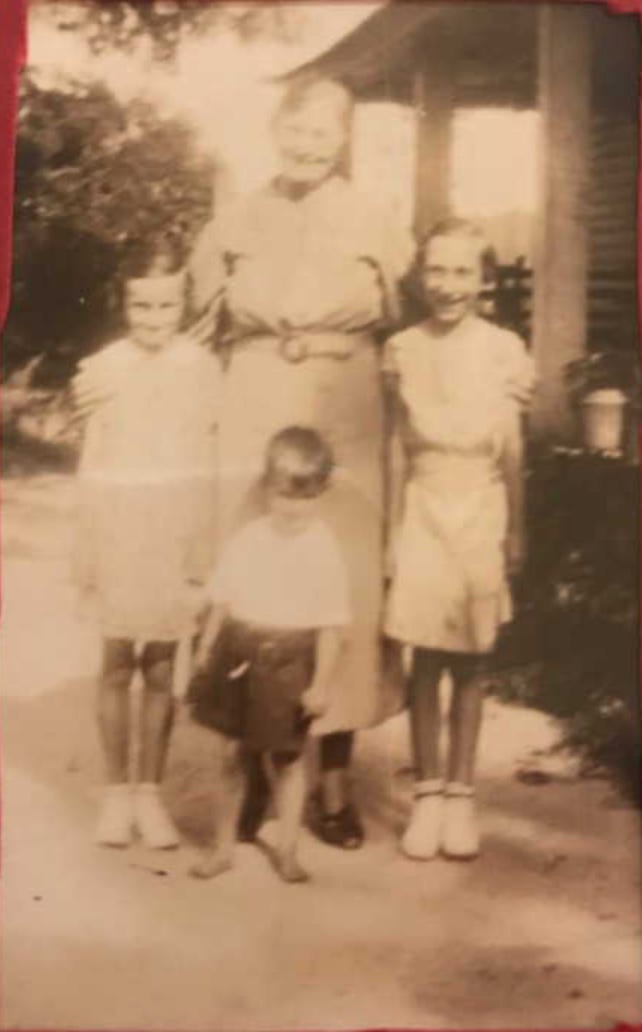
photo of Grannie Edens and my grandmother Catherine she is far right looking at the photo.
The Legacy
Aunt Esther died on November 26, 1976, in Pickens—her hometown, where she had been born eighty years earlier on December 19, 1895. By then, she had accumulated a significant estate: rental houses, savings, the fruits of a lifetime of work and careful stewardship.
She left it to her stepchildren, her nephews, her nieces. But the real inheritance wasn’t in the property deeds or the bank accounts.
The real inheritance lives in me every time I think of her. It’s in the memory of brushing her hair. It’s in the taste of cornbread crumbled into cold milk. It’s in the way my mother loved her, and the way that love was passed down to me.
Some people are remembered for what they built or what they won. Aunt Esther should be remembered for what she gave—her time, her love, her steady presence in an unsteady world.
She was my great-grand aunt. She was a beloved teacher. She was, simply, Aunt Esther.
And she mattered.
Some of the historical details in this post come from the research of John Davis Edens 2 (1920–2010), Aunt Esther's nephew. Inspired by her, he spent years compiling MY ANCESTRY (1991, revised 1995), ensuring that the stories of the Edens, Lynch, Lewis, and Pace families would not be lost to time.
This post is part of The Great Greats series, where we explore the remarkable lives of our ancestors.
Outstanding!!❤️❤️