


A family history from the textile mills of the South Carolina Piedmont
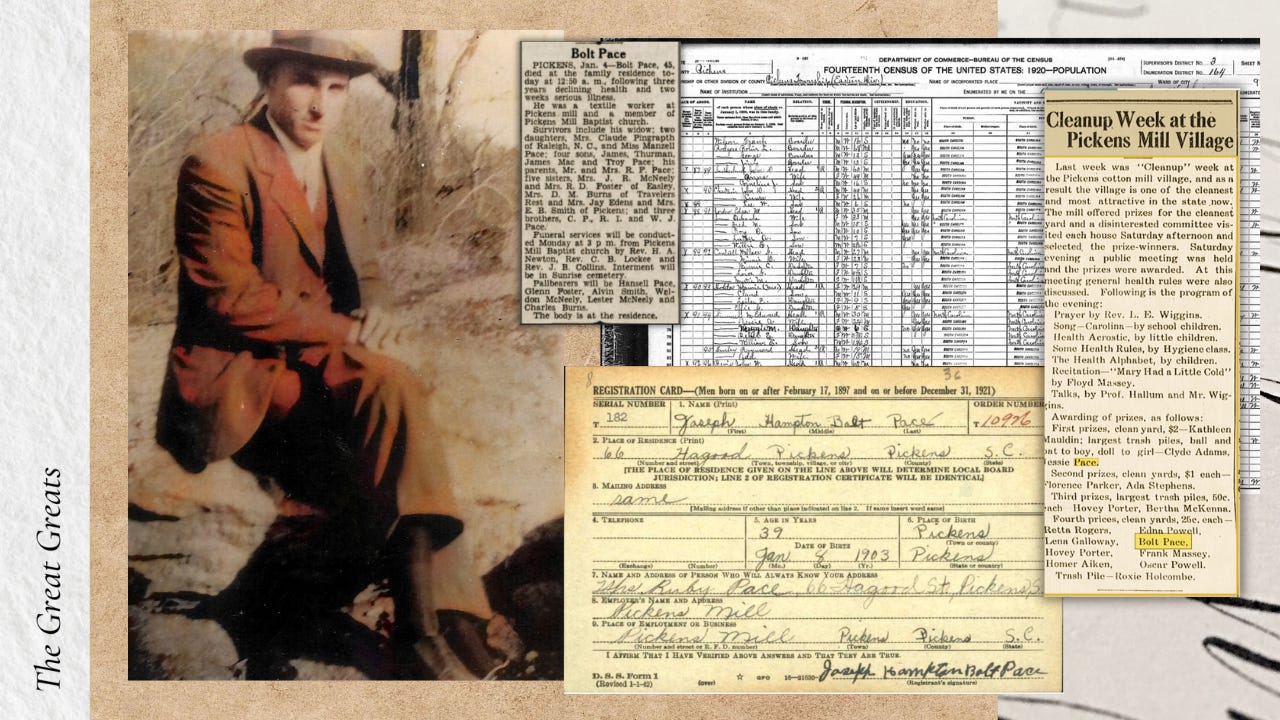
There's something haunting about a man who dies four days before his birthday. Joseph Hampton Pace—known to everyone as "Bolt"—took his final breath at 12:50 a.m. on January 4, 1948, in the family home where he'd lived his entire 45 years in Pickens, South Carolina. His 45th birthday would have been January 8th. He almost made it.
The obituary in the Greenville newspaper was brief, as they often were in 1948. But between its sparse lines lies the story of a Southern mill worker whose life, while seemingly ordinary, represents the backbone of an entire generation that powered the textile industry of the South Carolina Piedmont.
A Life in the Mills
Bolt was born into the world of cotton mills on January 8, 1903, the son of Richard Franklin "Frank" Pace and Corrie Ann Jones Parks. The Pace family was deeply rooted in Pickens County—Frank had been born there in 1871, and the family had watched the area transform from agricultural countryside to a bustling center of textile manufacturing.
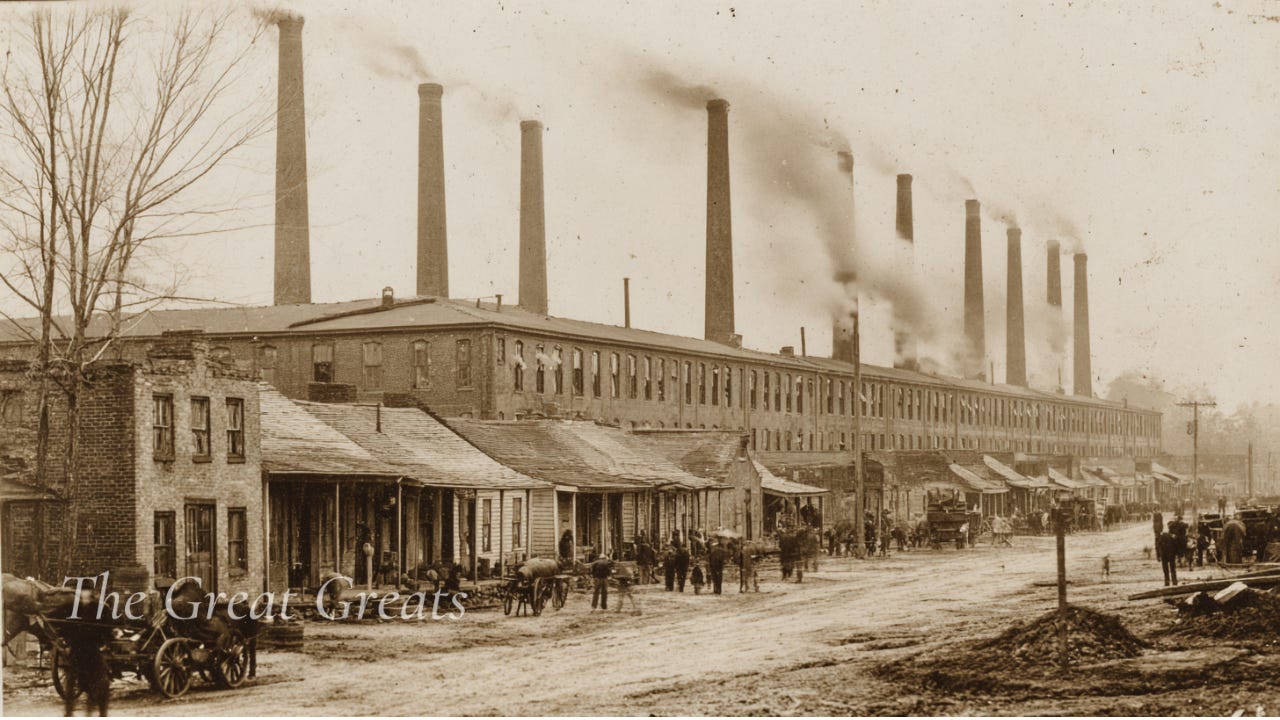
The Pickens textile mill began operating in 1907, when Bolt was just four years old. Like many in his generation, including his own sister Kate who started working in the mill at age 12, Bolt found work as a textile worker at the Pickens mill, where the rhythmic clatter of looms and the humid air thick with cotton dust became the soundtrack of his daily existence. His father Richard Frank Pace also worked there until retirement. It was honest work, steady work, the kind that built communities and fed families throughout the textile towns of South Carolina.
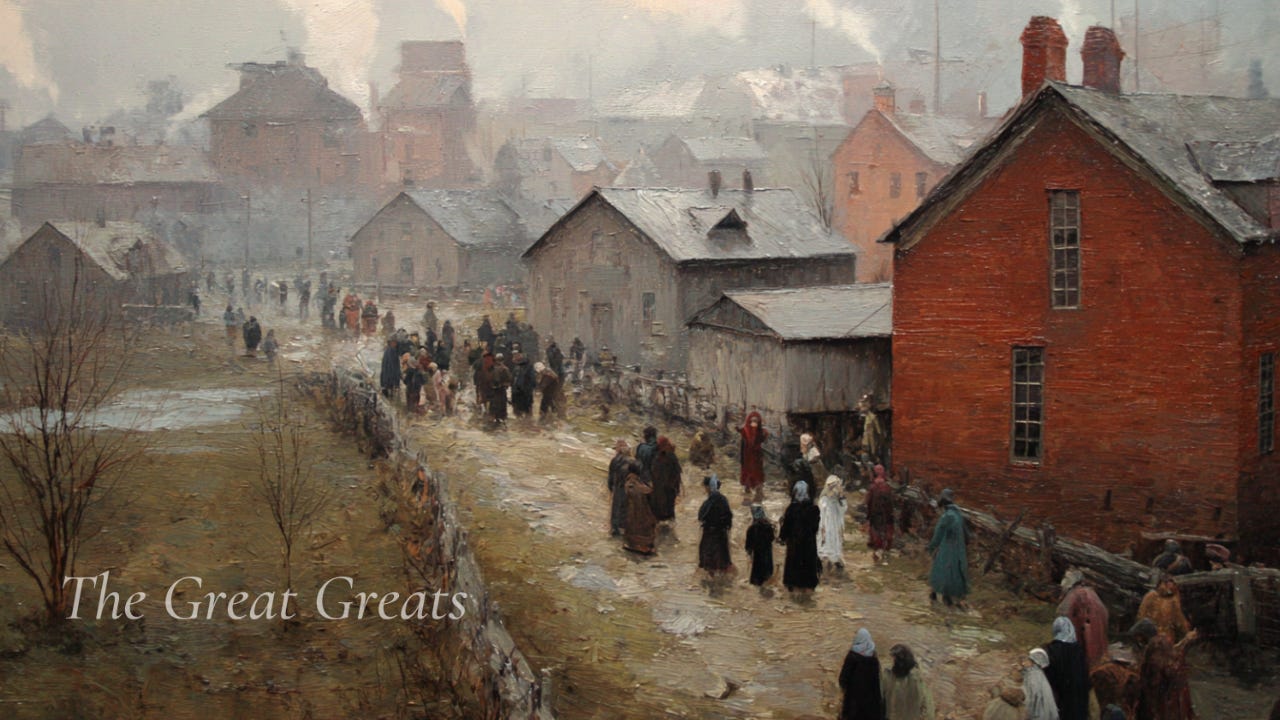
Even as a child, Bolt showed the community spirit that would define his character. In March 1915, when he was just 12 years old, both he and his 10-year-old sister Jessie won prizes during "Cleanup Week" at the Pickens Mill Village. The local newspaper proudly reported that the mill village was "one of the cleanest and most attractive in the state" thanks to residents like the Pace children who took pride in maintaining their family's yard. It's a charming glimpse into mill village life—where even children participated in community improvement efforts and took pride in their neighborhood's appearance.
We get a clearer picture of the adult Bolt from his World War II draft registration, filed on February 16, 1942, when he was 39 years old. The document describes a man of substantial build—5 feet 11 inches tall, weighing 165 pounds, with a ruddy complexion, brown hair, and blue eyes. At 39, with children to support, he would have been classified for essential home front work rather than combat service. Like all American men, he registered for the draft as the country mobilized for war, doing his civic duty while continuing his vital work at Pickens Mill. His employer was listed as Pickens Mill, confirming his long tenure there, and his next of kin was Ruby Pace—his second wife, Ruby Holcombe.
But mill work was also hard work. The long hours, the physical demands, and the environment took their toll on workers' health. For Bolt, that toll would prove significant.
The Decline
The obituary mentions "three years declining health"—a phrase that suggests Bolt's body began failing him around 1945, when he was just 42 years old. We can only speculate about the cause: perhaps it was the mill environment, perhaps something else entirely. What we know is that for three long years, this man who had worked with his hands and his strength watched his body betray him.
The final two weeks were described as "serious illness." One wonders if the family knew the end was coming, if they gathered around his bedside in those last days of 1947 and early January 1948, watching and waiting and hoping he might see one more birthday.
A Family Man
Bolt's life was shaped by love and loss, marriage and family. He was first married to Latha Babb, with whom he had three children: Willie Mae Pace (born 1923), James Clarence Pace (born 1926), and Thurmond Alvin Pace (born 1928). After Latha's death, he married Ruby Holcombe, and they had two more children: Johnie Mack Pace (born 1937) and Troy Pace (born 1939).
When Bolt died in 1948, his widow Ruby survived him, along with all five of his children. The obituary refers to them as Mrs. Claude Pineraph (Willie Mae, who had married and moved to Raleigh, North Carolina), Miss Manzell Pace (likely a family nickname or middle name), and the four sons: James, Thurman, James Mac (Johnie Mack), and Troy. These children would grow up without their father, coming of age in post-war America with only memories and stories to guide them.
The extended Pace family was large and close-knit. Bolt's parents, Mr. and Mrs. R. F. Pace, had to bury their son—every parent's nightmare. Five sisters mourned their brother: Mrs. J. R. McNeely and Mrs. F. D. Foster of nearby Easley, Mrs. D. M. Burns of Travelers Rest, and Mrs. Jay Edens and Mrs. E. B. Smith, who remained in Pickens. Three brothers—C. P., R. I., and W. J. Pace—served as pallbearers alongside other family members and friends.
A Community Farewell
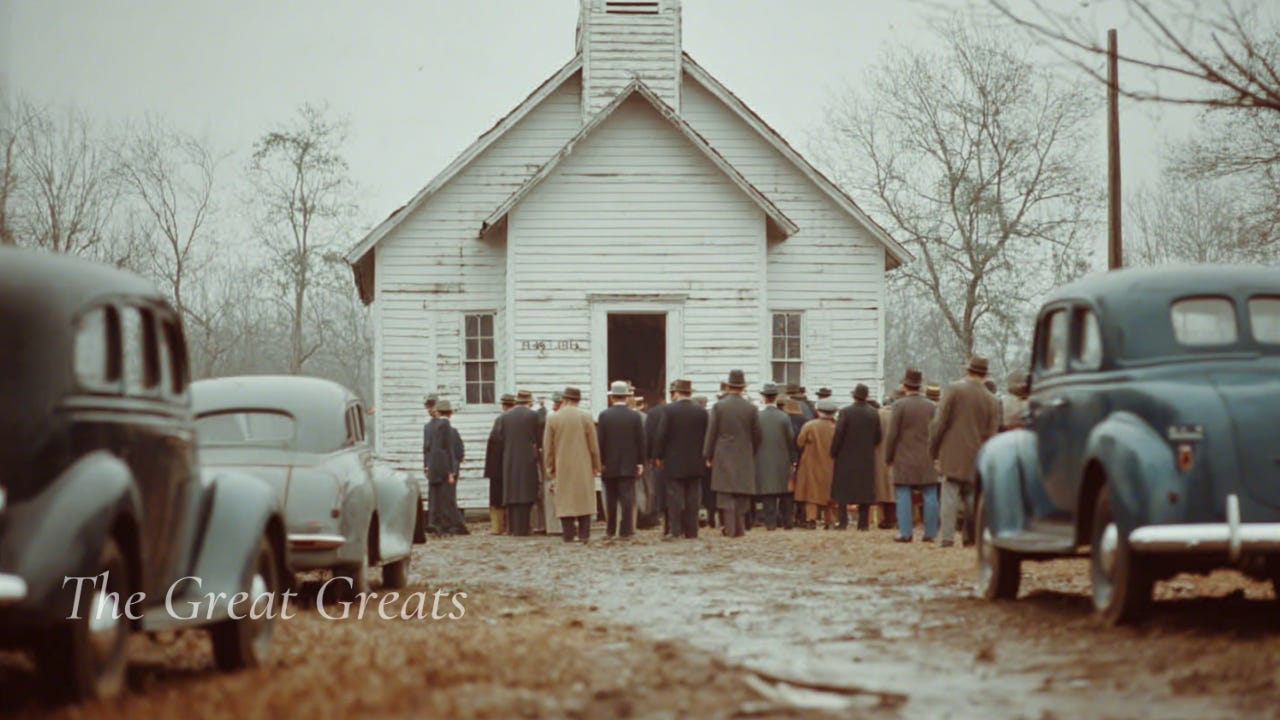
On Monday, January 5, 1948, the community gathered at Pickens Mill Baptist Church to say goodbye to one of their own. Three ministers—Rev. H. A. Newton, Rev. C. B. Lockee, and Rev. J. B. Collins—officiated, a testament to the respect Bolt had earned in his 45 years.
The pallbearers were a mix of family and community: Hansell Pace, Glenn Foster, Alvin Smith, Weldon McNeely, Lester McNeely, and Charles Burns. These men, probably mill workers themselves, carried their friend and neighbor to his final rest at Sunrise Cemetery.
The Broader Story
Bolt Pace's story is, in many ways, the story of thousands of Southern mill workers in the first half of the 20th century. Born into families that had transitioned from farming to factory work, they powered an industrial transformation that reshaped the South. They lived in mill villages, worshipped in mill churches, and found their identities intertwined with the rhythms of industrial production.
Their lives were often cut short by the demands of their work and the limited medical care available in small Southern towns. Some died younger than they should have, leaving behind widows and children who had to navigate a changing world without them.
Yet they also built something lasting: communities bound together by shared struggle and mutual support, churches that served as anchors for mill villages, and families that passed down values of hard work, faith, and resilience.
A Life Remembered
Today, nearly 75 years after Bolt Pace drew his last breath, his story serves as a window into a world that has largely disappeared. The mills that once defined towns like Pickens have closed or moved overseas. The mill villages have been absorbed into suburban developments. The rhythms of industrial life that shaped entire generations have given way to different patterns of work and community.
But the human story endures. In every family tree, there are figures like Bolt Pace—ordinary people who lived with dignity, worked with their hands, loved their families, and faced life's challenges with quiet courage. They may not have achieved fame or fortune, but they built the foundations upon which later generations would stand.
Joseph Hampton "Bolt" Pace missed his 45th birthday by four days. But in those 44 years and 361 days, he lived a life that mattered—to his widow, to his six children, to his extended family, to his church, and to his community. In the end, perhaps that's the truest measure of any life: not its length, but the love it generated and the lives it touched.
Rest in peace, Great-Uncle Bolt. Your story lives on.
Have you discovered stories of mill workers or other industrial laborers in your own family tree? Share your discoveries in the comments below.
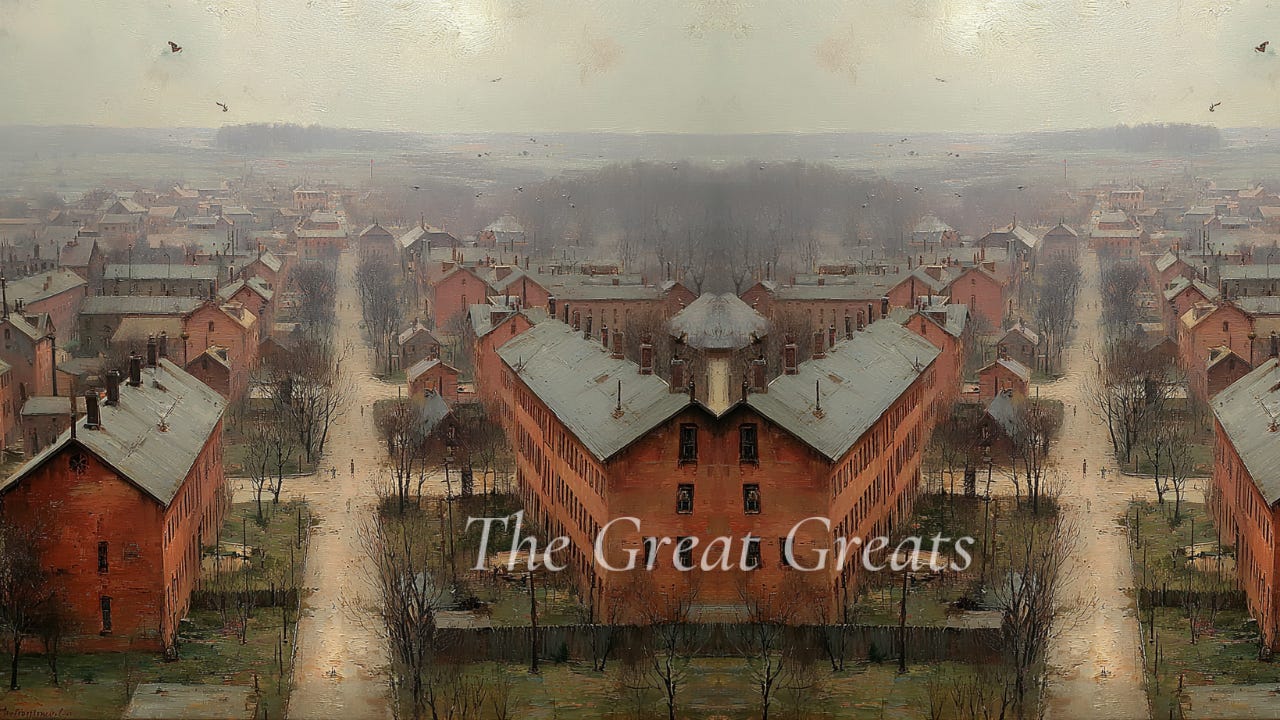
The mill villages must have been like our modern day subdivisions!
That generation worked hard for their pay and started at a young age to help the family. I remember grandmother (Kate Pace Edens) telling me they had a dirt yard and would sweep it everyday to keep it clean! My grandmother was a hard worker from a child until the day she died and taught me valuable life lessons. Bolt was her brother.