


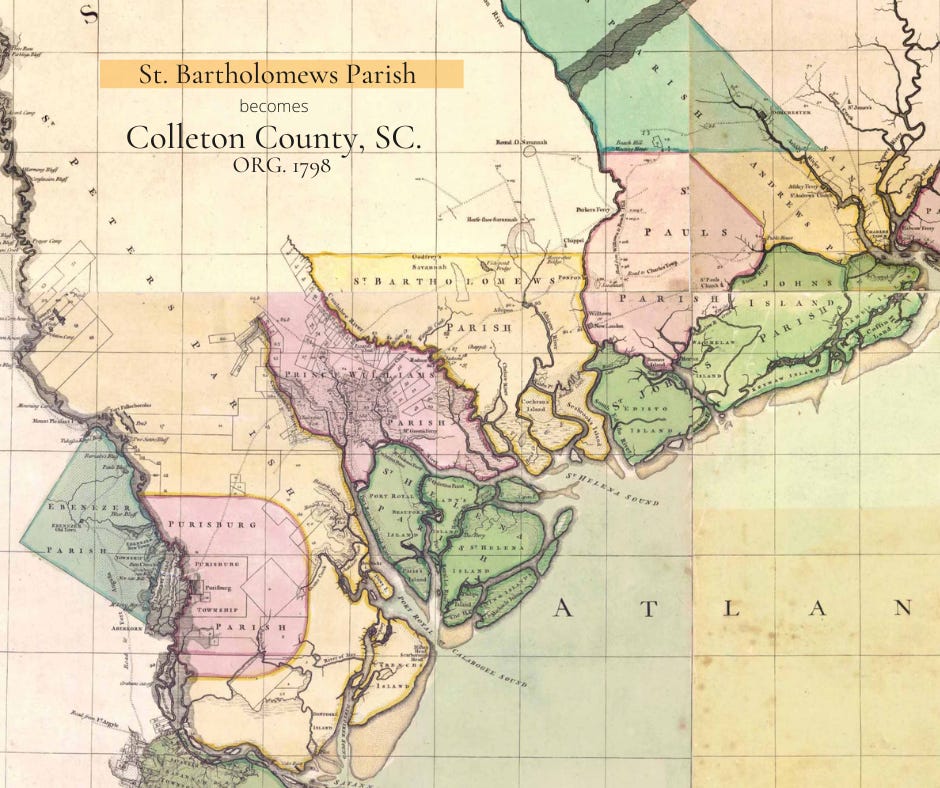
Every family tree has a name at the very bottom of the page — the ancestor beyond whom the paper trail goes quiet. For our Walker line, that name is Isham Walker Sr., born around 1730 in St. Bartholomew’s Parish, the coastal stretch of South Carolina we now call Colleton County.
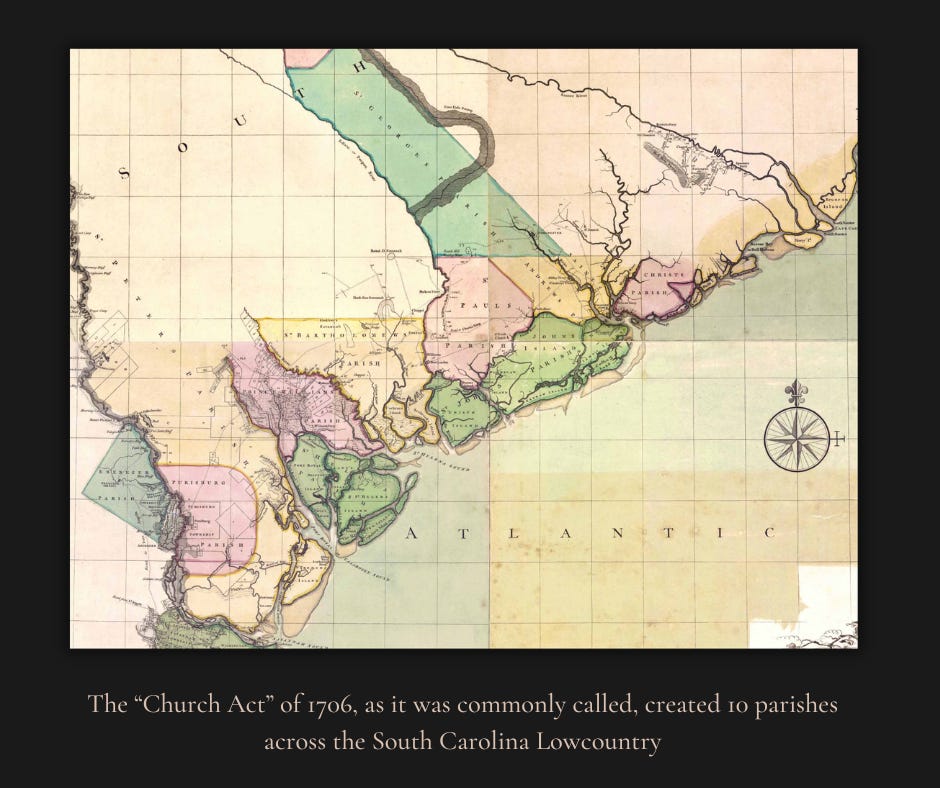
He is Generation One. Everything that follows — the migrations, the mill villages, the marriages, the names handed down for two centuries — begins with him.
A son of the Lowcountry
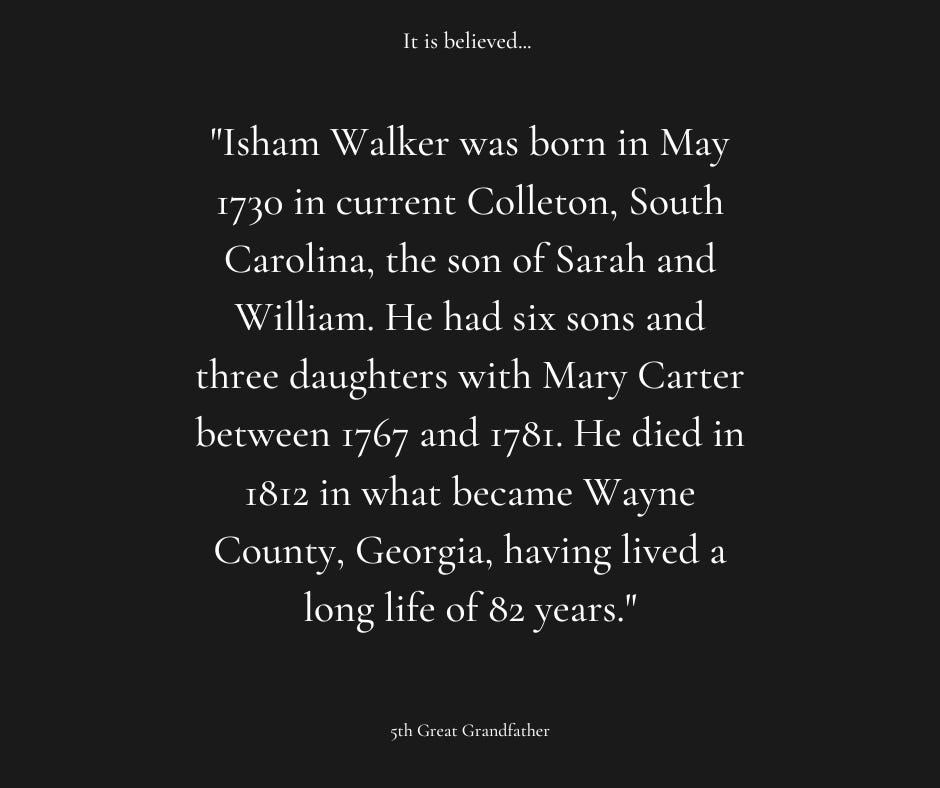
Isham was, by the family record, the son of Sarah and William Walker, born into the tidewater parishes of colonial South Carolina around 1730. He married Mary Carter, and between 1767 and 1781 the couple raised a large family in a colony that was about to become a country.
The war — and the refugee
Isham Walker’s name survives not only in family memory but in the record of the Revolution itself. He served as a soldier, and when the British overran the Georgia and Carolina coast, he became a refugee — one of the many patriots driven from home for refusing to bend to the Crown.
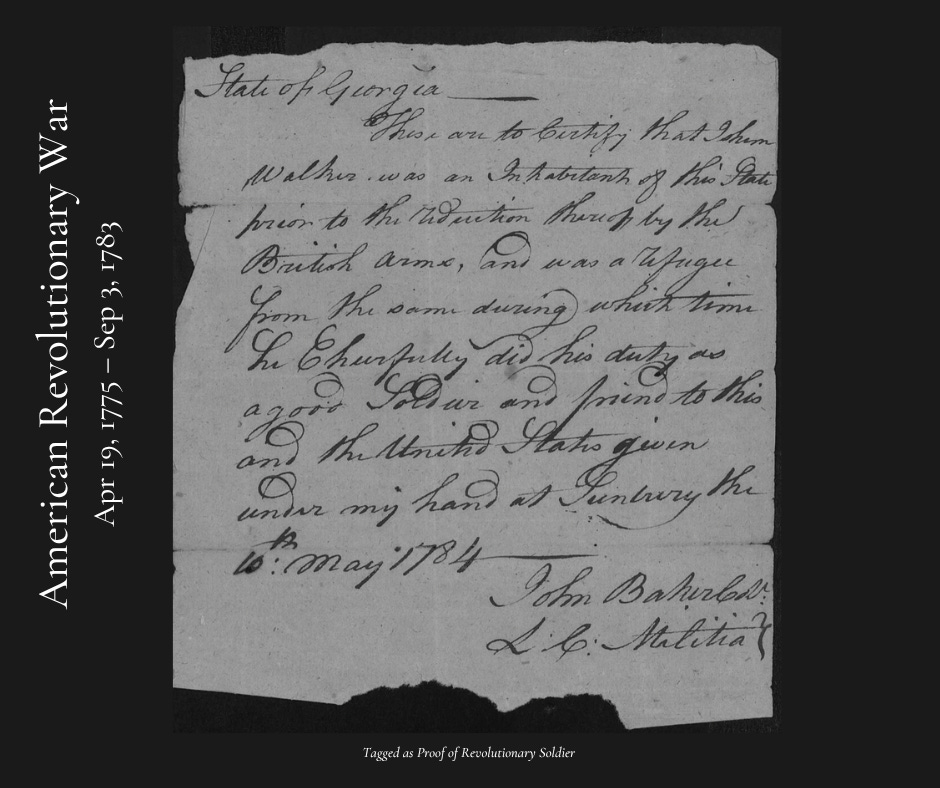
After the war, the new state of Georgia formally recognized his service. A certificate issued at Sunbury on the 20th of May, 1784, records it plainly:
This is to certify that Isham Walker was an inhabitant of this state prior to the reduction thereof by the British arms, and was a refugee from the same, during which time he cheerfully did his duty as a good soldier and friend to this and the United States. — Given under my hand at Sunbury, the 20th May 1784
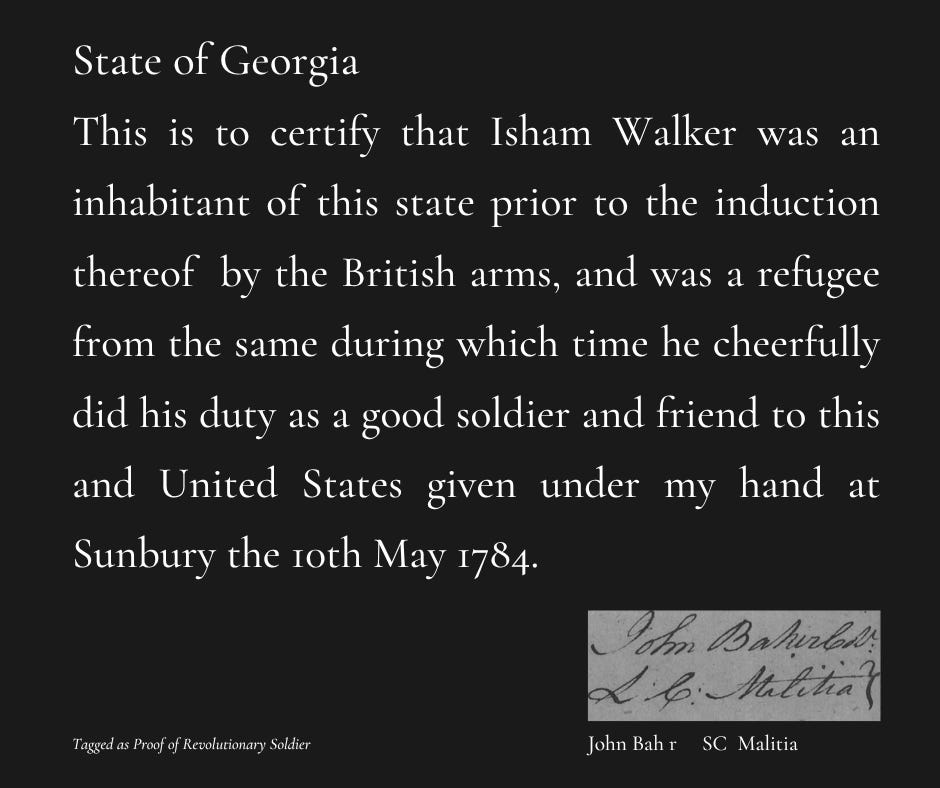
“A good soldier and friend.” Nearly two hundred and fifty years later, it is still one of the finest things ever written about a member of this family.
Eight children
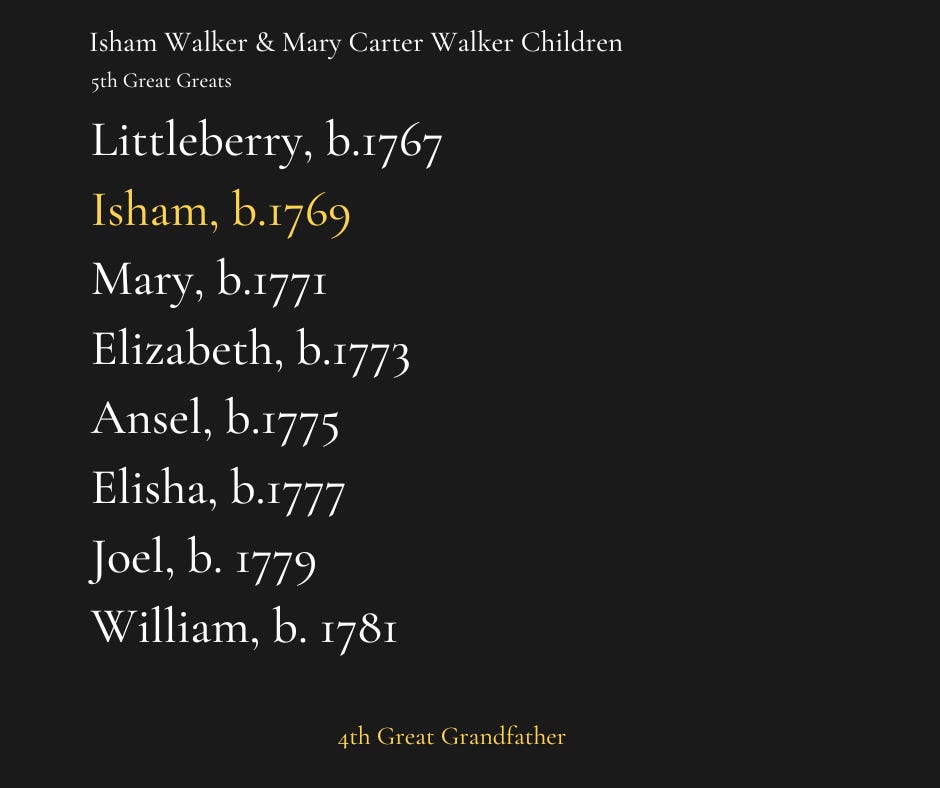
Isham and Mary had eight children, many of whom would carry the family’s pioneer streak into the new counties of frontier Georgia:
Littleberry Walker (b. 1767) — married Elizabeth McClain.
Isham Walker Jr. (1769–1839) — married Civility Jones; a charter member of Sardis Primitive Baptist Church.
Mary Ann Walker (b. ~1771) — wife of Stephen Browning; later named in her mother’s 1818 will.
Elizabeth Walker (b. 1773) — married Andrew N. Johnston; also named in the will.
Ansel Walker (b. 1775) — possibly married Allie Tison.
Elisha Walker (b. 1777) — recorded on the 1794 Glynn County tax digest.
Joel Walker (b. 1779) — recorded on the 1794 Glynn County tax digest.
William Walker (b. 1781) — recorded on the 1794 Glynn County tax digest.
Into Georgia
Like so many Revolutionary families, the Walkers moved west after the war, following opportunity into the opening lands of coastal Georgia. By roughly 1800 they had settled there, and by 1809 both Isham Sr. and Isham Jr. appear on the Camden County tax digest. In those same records, Isham Sr. is named as the agent for three Johnston minors — Andrew N., Isham, and Isabella — a small clue to how tightly the Walker and Johnston families were already bound together.
Isham Walker Sr. died in Wayne County, Georgia, around 1812, having lived, by the family’s reckoning, some eighty-odd years — a long life that spanned colony, revolution, and a brand-new republic.
Two graves no one can find
Mary Carter Walker outlived her husband by several years, dying testate in Wayne County in 1818. Her will divided her estate between her two daughters — Mary, wife of Stephen Browning, and Elizabeth, wife of Andrew N. Johnston.
And then the trail goes cold. Neither Isham’s nor Mary’s burial place is known today. Mary is almost certainly laid beside her husband in an unmarked grave somewhere in Wayne County; the old wooden marker that once stood over her is long gone, dissolved back into the Georgia soil.
This is not unusual for the earliest settlers. At places like High Bluff Primitive Baptist Church, where later generations of the family worshipped, very few of the graves of the old settlers who died before 1860 are marked at all. For families like ours, the resting places of the first generation often survive only as an inference — a location guessed from a tax digest, a land grant, a neighboring headstone.
A note on the disagreements
Anyone who digs into these records quickly finds that they don’t all agree. Dates shift by a year or two; children appear and disappear between transcriptions; even Isham’s own name is unsettled. Family tradition remembers him as “Isham David Walker Sr.”, but the contemporary documents — the tax digests, the 1784 certificate, Mary’s will — call him simply Isham Walker.
These are the honest seams of genealogy, and I’m leaving them visible on purpose. This is a working record, not a closed case, and the search for further documentation continues.
If you descend from Isham and Mary Walker — or have stumbled onto their unmarked graves in Wayne County yourself — I’d love to compare notes in the comments.

#ishamwalkergeneology #thegreatgreats #walker #revolutionarywar #familyhistory #genealogy #georgiahistory #southcarolinahistory #americanrevolution #ancestry #everynamehasastory