


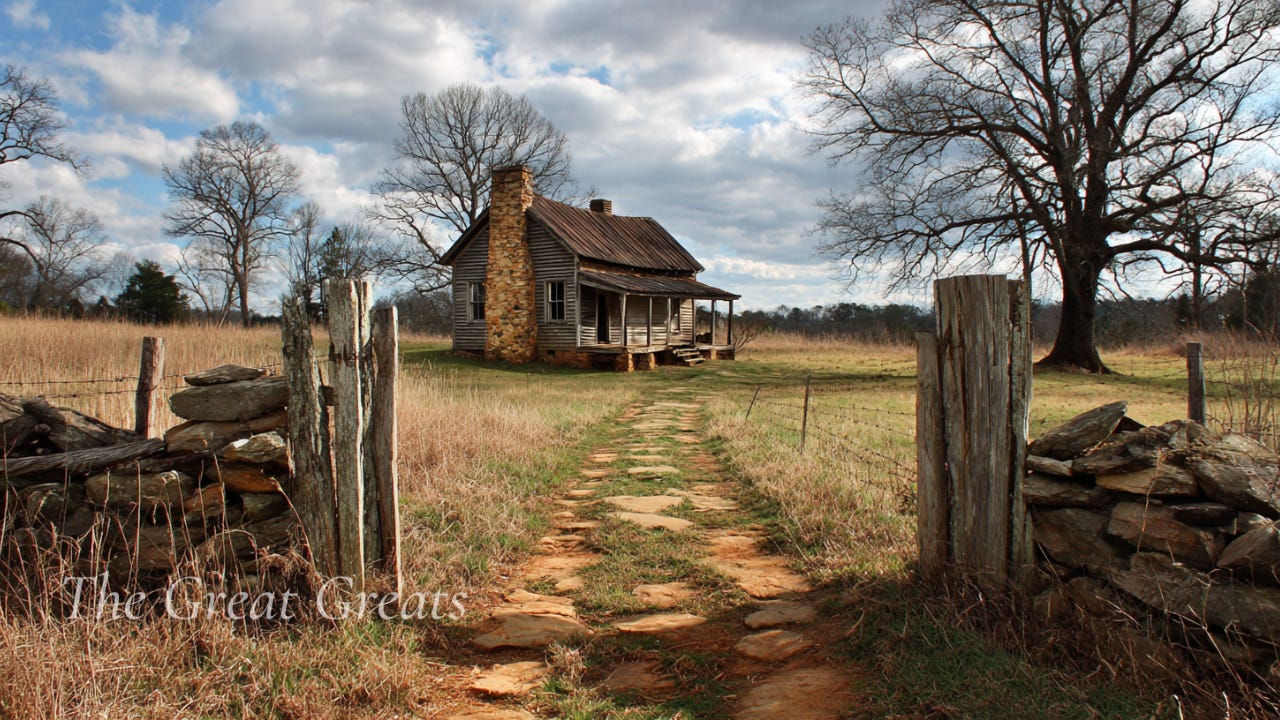
There's something magical about standing in a place where your ancestors once walked, worked, and built their lives. For me, that place is nestled in the foothills of South Carolina, in what was once called the Pendleton District—a name that appears on old maps and census records, but has long since been carved up into the counties we know today as Anderson, Oconee, and Pickens.
When South Carolina Was Young
Picture South Carolina in 1789. The Revolutionary War was fresh in everyone's memory, and the new state was still figuring out how to organize itself. That year, legislators created the Pendleton District from freshly ceded Cherokee lands between the Savannah and Saluda Rivers. It was frontier territory—wild, promising, and perfect for families looking to start over.
The district didn't last long in its original form. Like many political entities of the era, Pendleton was constantly being reorganized, split, and renamed. By 1826, it had been divided into Anderson and Pickens counties. Later, in 1868, Pickens County itself was split again to create Oconee County. But for nearly four decades, Pendleton District was home to countless families building new lives in the American South.
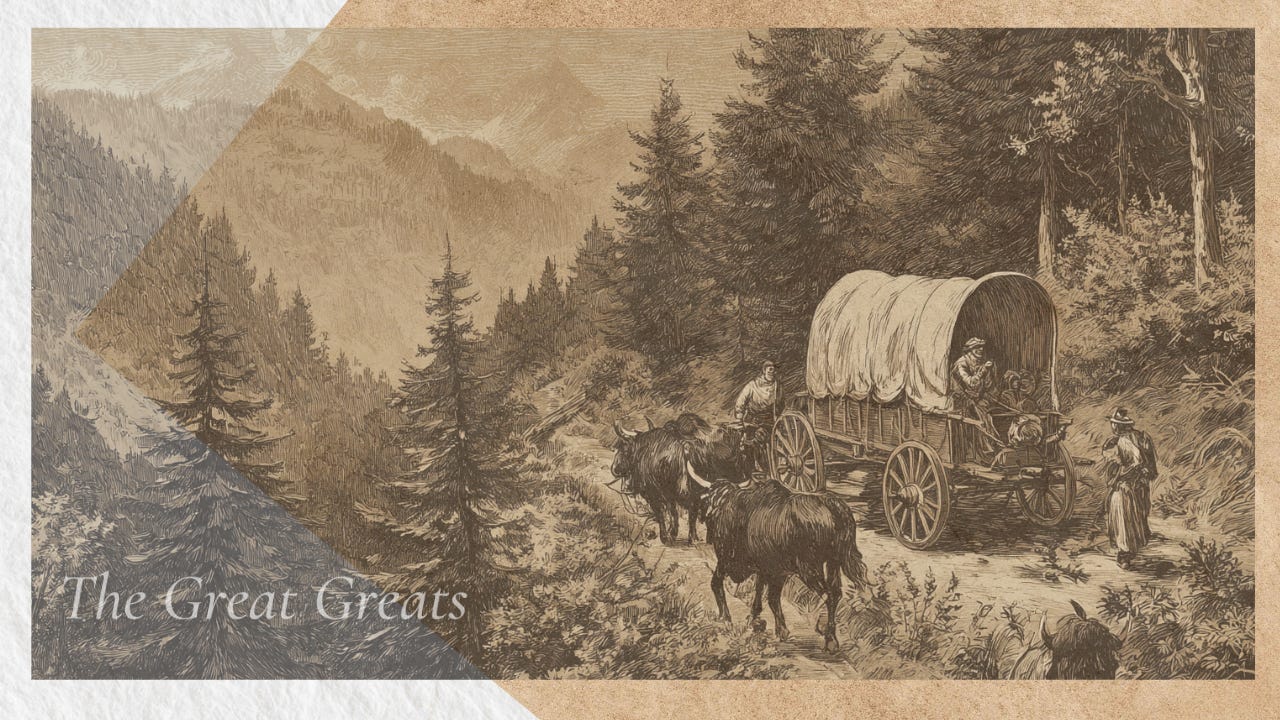
Following the Great Philadelphia Wagon Road
Many of our ancestors found their way to Pendleton District via the Great Philadelphia Wagon Road, that legendary pathway that carried European immigrants south from Pennsylvania through Virginia and the Carolinas. Germanic Protestants, Scotch-Irish Presbyterians, and French Huguenots all made this journey, some continuing all the way to Georgia, others settling in the promising valleys of what would become upstate South Carolina.
My Ancestors in the Oolenoy Valley
When I trace my family lines back through the 1800 Census of Pendleton District, I find them scattered throughout the region, but many clustered in a particularly beautiful area called the Oolenoy Valley. Located in the northeastern part of what is now Pickens County, near the mountains, this valley became home to several branches of my family tree.
My 4th great-grandfather William Lynch appears in that 1800 census, as does my 5th great-grandfather Alexander Edens. The Edens family seems to have been particularly drawn to the area around Oolenoy Creek, a tributary of the Saluda River. Land records show Alexander Edens, his son Samuel Edens, and Samuel's son William Elford Edens all acquired property along this creek within the Pendleton District boundaries.
The beauty of genealogical research is discovering these patterns—how families often settled near each other, how waterways determined where communities formed, how political boundaries shifted around the people who called a place home.
More Than Just Names on a Census
But the Edens weren't my only ancestors in Pendleton District. Jacob Lewis shows up in that same 1800 census, in the area that would later become Pickens County. The Eddins family—William Eddins and his father Benjamin—both purchased land on Doddey's Creek of the Saluda River in what was then called Washington District, a short-lived subdivision of Pendleton.
Then there's Cornelius Keith, who likely made the move from Surry County, North Carolina around 1795, bringing his father, also named Cornelius, to settle in this promising new district.
Why These Old Boundaries Matter
You might wonder why I'm so fascinated by a political district that ceased to exist nearly two centuries ago. The answer lies in understanding how our ancestors lived and moved through the world. When William Lynch filed his census form in 1800, he wasn't thinking about the future Pickens County—he was a resident of Pendleton District, and that's how his records were filed, stored, and preserved.
For those of us hunting through courthouse records, old deeds, and census rolls, understanding these historical boundaries is like having a roadmap to the past. It helps explain why certain records are filed where they are, why some families seem to "disappear" between censuses (they didn't move—the county lines did), and how communities formed in the first place.
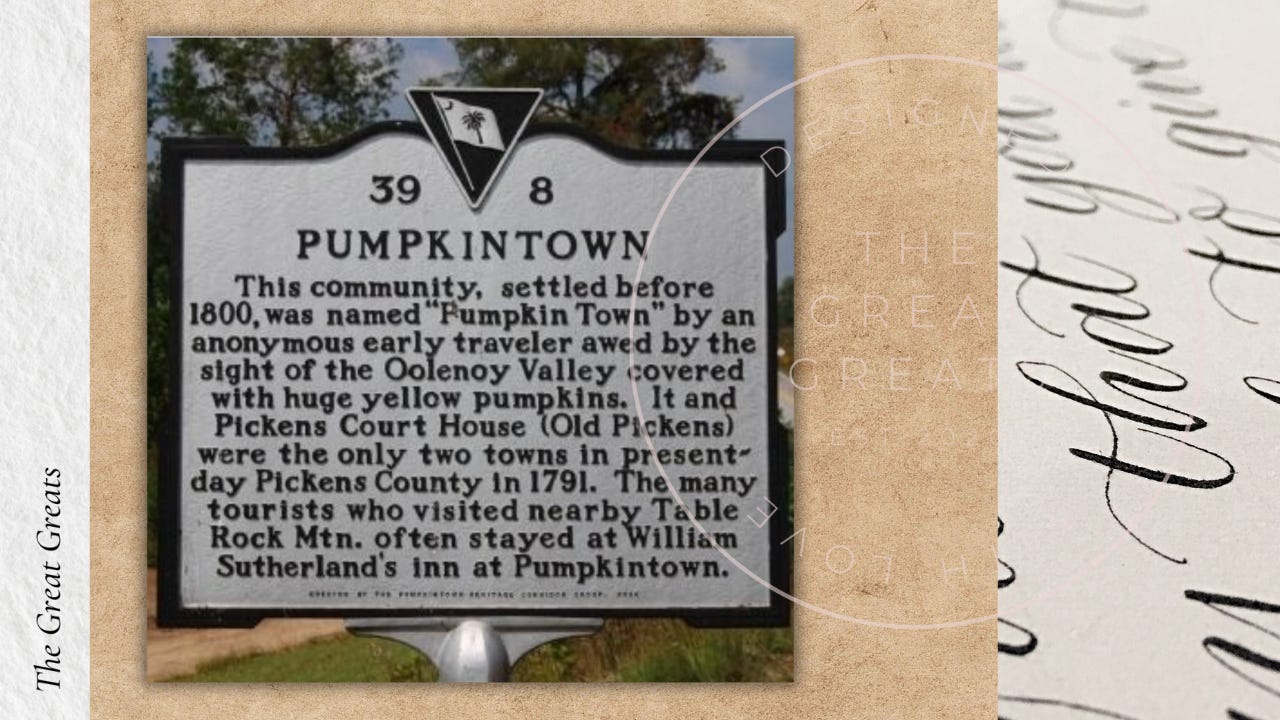
This community, settled before 1800, was named "Pumpkin Town" by an anonymous early traveler awed by the sight of the Oolenoy Valley covered with huge yellow pumpkins. It and Pickens Court House (Old Pickens) were the only two towns in present-day Pickens County in 1791. The many tourists who visited nearby Table Rock Mtn. often stayed at William Sutherland's inn at Pumpkintown. (related by marriage as well as thru several land transactions starting in 1799)
[Historical marker number 39-8 with triangular logo containing palmetto tree]
The Landscape They Knew
When I visit Pickens County today, I can still see echoes of the world my ancestors knew. The Oolenoy Creek still winds through the valley where the Edens family farmed. The Saluda River still flows past the lands where the Eddins and Keith families built their homes. Towns like Pickens, Walhalla, Easley, and Norris grew up around the communities these early settlers established.
Even places with whimsical names like Pumpkintown—where my ancestor William Sutherland later built the Table Rock Inn—connect me to a landscape that shaped my family's story for generations.
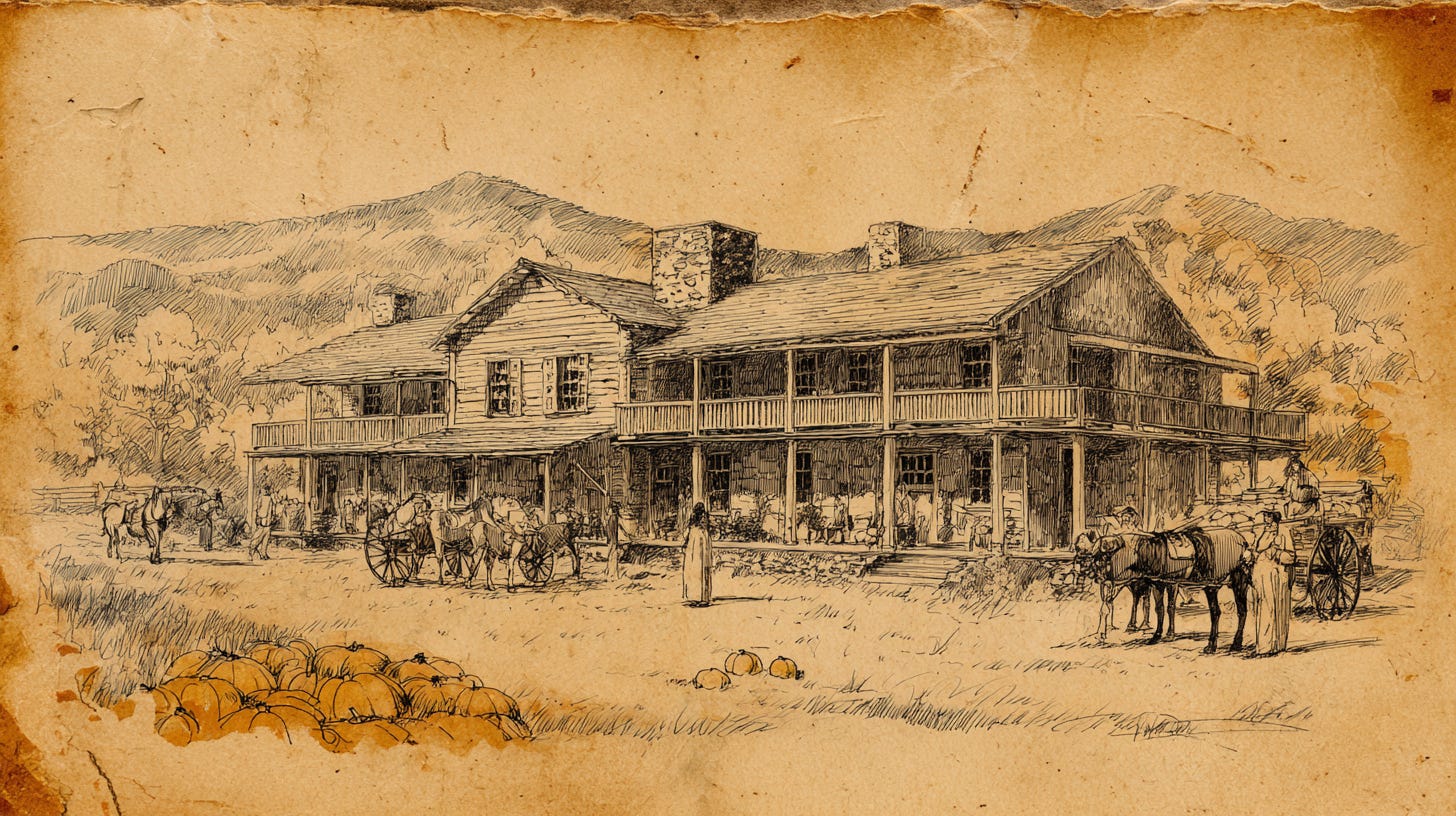
A pen and ink sketch captures what my ancestor William Sutherland's inn might have looked like in the early 1800s, welcoming weary travelers on their way to Table Rock Mountain. Set in the heart of the Oolenoy Valley that gave Pumpkintown its whimsical name—from fields of huge yellow pumpkins that amazed early visitors—this frontier establishment was one of only two towns in what would become Pickens County by 1791. No photographs exist of Sutherland's inn, making this artistic interpretation perhaps the closest we'll ever come to seeing where our ancestors built their lives and businesses in the rugged beauty of the Pendleton District.
More Than History
The Pendleton District represents something larger than just administrative boundaries or census curiosities. It represents that pivotal moment when families chose to leave everything familiar behind and strike out for new territory. It represents the courage to build communities in places where none had existed before.
These weren't wealthy plantation owners or powerful politicians (though some of those lived in Pendleton District too). These were ordinary people making extraordinary journeys, creating the foundation for the South Carolina we know today.
Every time I find another ancestor's name in a Pendleton District record, I'm reminded that family history isn't just about dates and names—it's about understanding the places that shaped the people who shaped us. And sometimes, the most important places are the ones that exist now only in old records and family stories, waiting for us to discover them and bring their stories back to life.
Have you traced your own family back to the Pendleton District or other historical boundaries that no longer exist? I'd love to hear about the places your ancestors called home.
I absolutely love these stories and pictures of our family history! Great job.